INTRODUCTION.

I began my research career in the summer of 2025, after my amazing analytical chemistry professor asked me if I was already doing research. When I said I was not, he invited me to be his research student. Since then, I have had the opportunity to work on 3 research projects with him. One as a volunteer over the summer, one as a directed studies student, and another as a UREAP. In the summer of 2026, I then got to present my research both at the WCUCC in Vancouver and the CSC in Toronto, which were loads of fun. This year (2026-2027), I get to work with Cyrene Catenza, who is already a great mentor, on a project analyzing dental sealants, which I think will be very interesting.

In my first year of university at UBCO, I had a very limited view on research, and I thought it would never be something I would end up doing. Now, having done lots of research over the past year and a half and having at least another year to come, I have a totally altered mindset. I now see how research brings like-minded people together who find interest in the same niche topics and how it is a very rewarding pursuit in knowing you are exploring new areas as well as furthering the knowledge in that field.


THE STANDARDS.

Throughout my academic career, I have had a lot of exposure to research and have been able to view it from many perspectives. By constantly needing to reference and learn from existing research, I learned how to evaluate scientific papers and adapt and apply research methods to my specific research. Through conducting my own research, I have gained an understanding of the research process and how to draw conclusions. And through presenting my research at multiple research conferences and engaging with other researchers, I have learned about knowledge mobilization.
  • UREAP Research Proposal (2025)

Near the beginning of my research career with Kingsley Donkor in Fall 2025, I was invited to apply for a UREAP research scholarship on quantifying CBD in pet treats and supplements, which is currently a largely unregulated market where testing is important to ensure these companies are accurately listing CBD content. Before I was even confirmed to have the opportunity to do such a research project, however, I first had to create a research proposal, outlining a literature review, methodology, and expected forms of presentation. The literature review showed me how important it is to explore what has previously been done in the field of your research before you even start planning your project, as it will give useful insight into how you will develop your methods based on other researchers’ experiences. Additionally, the literature review clarified why exactly my project mattered and was worth pursuing. I then worked with my professor to develop the methodology, which taught me how much time thorough planning saves later.

  • Analytical Chemistry Lab

With my group, we led a self-designed and directed research project testing an internet trend of whether putting cheap vodka through a Brita filter makes it taste like expensive vodka. We had to develop a method, partition responsibilities, source materials, and use capillary electrophoresis to compare the alcohol profiles of cheap and expensive vodka before and after Brita filtration. This experience showed how much work can really get done in 3 hours with proper planning. Shown here is our research proposal for the project, showing our understanding of the research process. It was also helpful that three of us were research students in science at TRU.

  • Cell Physiology Lab

In another group project as part of a course, I worked with a team to design a project on the effects of varying antibiotic concentrations on the growth of a lung cancer cell population. We had to do a literature review, apply methods learned in class, develop a research proposal, and present our findings. Both of these group projects helped me explore what designing a research project with other members is like and how much help it can be to have another set of eyes on your work.

  • UREAP Literature Review

As a part of my proposal to do a research project with a UREAP scholarship, I had to do an in-depth literature review on the field of my research. I had to examine many other research articles and journals to investigate the purpose of my own research project and how it fills the gaps in the literature and is relevant to the scientific and cultural community. I also had to consider the methodology I would use to quantify CBD in pet treats and the advantages and disadvantages of each. I have included my literature review I composed for the application, which considers how analyzing CBD in pet treats in a largely unregulated market is important and the common methods used for similar studies and their benefits.

  • Chemistry Lab Report Discussions

Throughout my degree, I have been involved in many chemistry lab courses that often required weekly lab reports. In such lab reports, my discussion section would require comparing my results to other peer-reviewed experiments of similar nature or to find specific reasons that my experiment produced a lower yield than expected, and seeing how their differing methodology could have accounted for any discrepancies seen in my work.

  • Instrumental Analysis Research Project

A distinct application of evaluating existing research was my work on a project in instrumental analysis. In this project, I had to do a deep dive on the impact and purpose of this research article about how Per- and polyfluoroalkyl substances (PFAS), which GORE-TEX used to be made of, are of significant harm to the environment. Additionally, I had to dissect the article for the methods used and search for related articles on similar experiments or the description of certain techniques to understand and list the financial and resource implications being used. Along with this, I had to describe my technique in searching for these research articles, which helped me better understand a more efficient way to search scientific journals. Here I have included the PDF for this assignment.

  • ICP-MS / Microwave Acid Digestion

In my research for studying the content of trace and heavy metals in bee pollen, I used an inductively coupled plasma – mass spectrometer to analyze the dissolved metals in a bee pollen solution. However, before I could do that, I had to use microwave digestion with acid to break down the organic material and have the elements dissolved and free-floating for subsequent detection. Here is an excerpt from my final report on the research discussing the methodology used.

  • Capillary Electrophoresis

For my UREAP project on determining the accuracy of CBD in pet treats, I used capillary electrophoresis. This instrument relies on the charge of molecules migrating with or against an electric field within a column that separates the different molecules based on charge and size so that they can be detected together near the end of the column. Again, I have included an excerpt from my final report on the project, discussing the methodology used.

  • Cell Culturing and Growth Assays

Aside from my research in chemistry, microbiology, cell physiology, and biochemical techniques 2, I have had the opportunity to culture bacterial and mammalian cells and perform assays to assess their growth. In biochemical techniques 2, I have also been able to use gene editing technology to purposefully mutate specific genes. Here is a simplified image of said gene editing mechanism.

A huge part of all of my research projects has been interpreting my results to show them in a meaningful way where they can be digested by somebody who is not an expert in the field.

  • Directed Studies (2025-2026): Bee Pollen

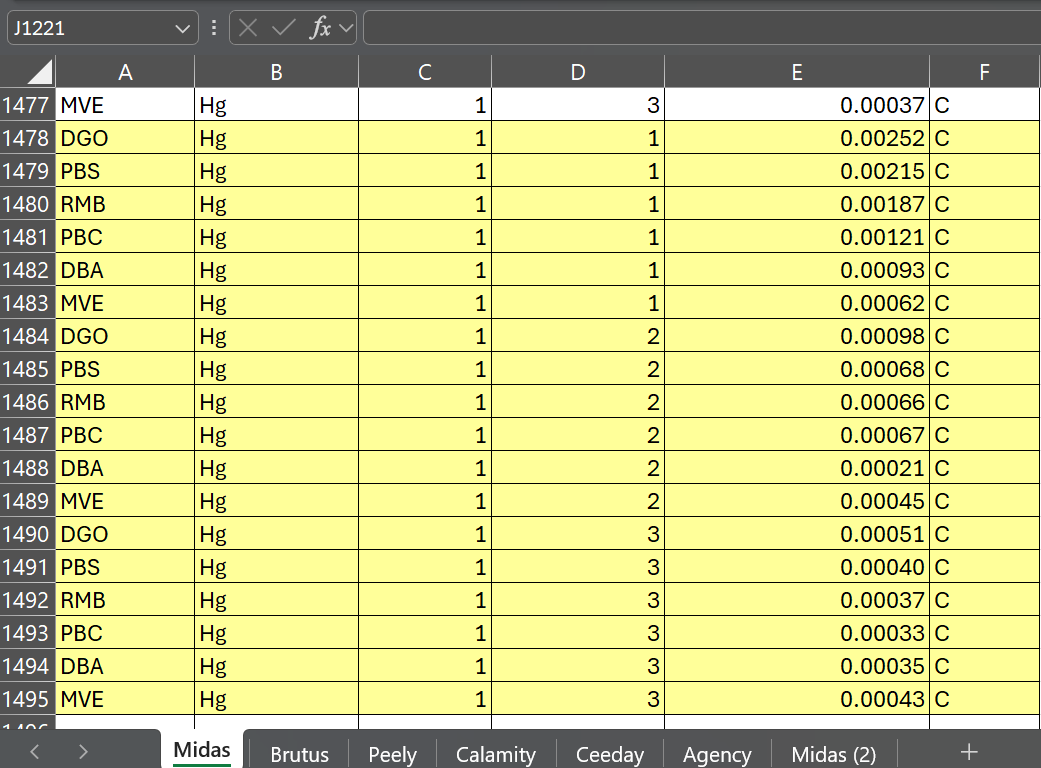
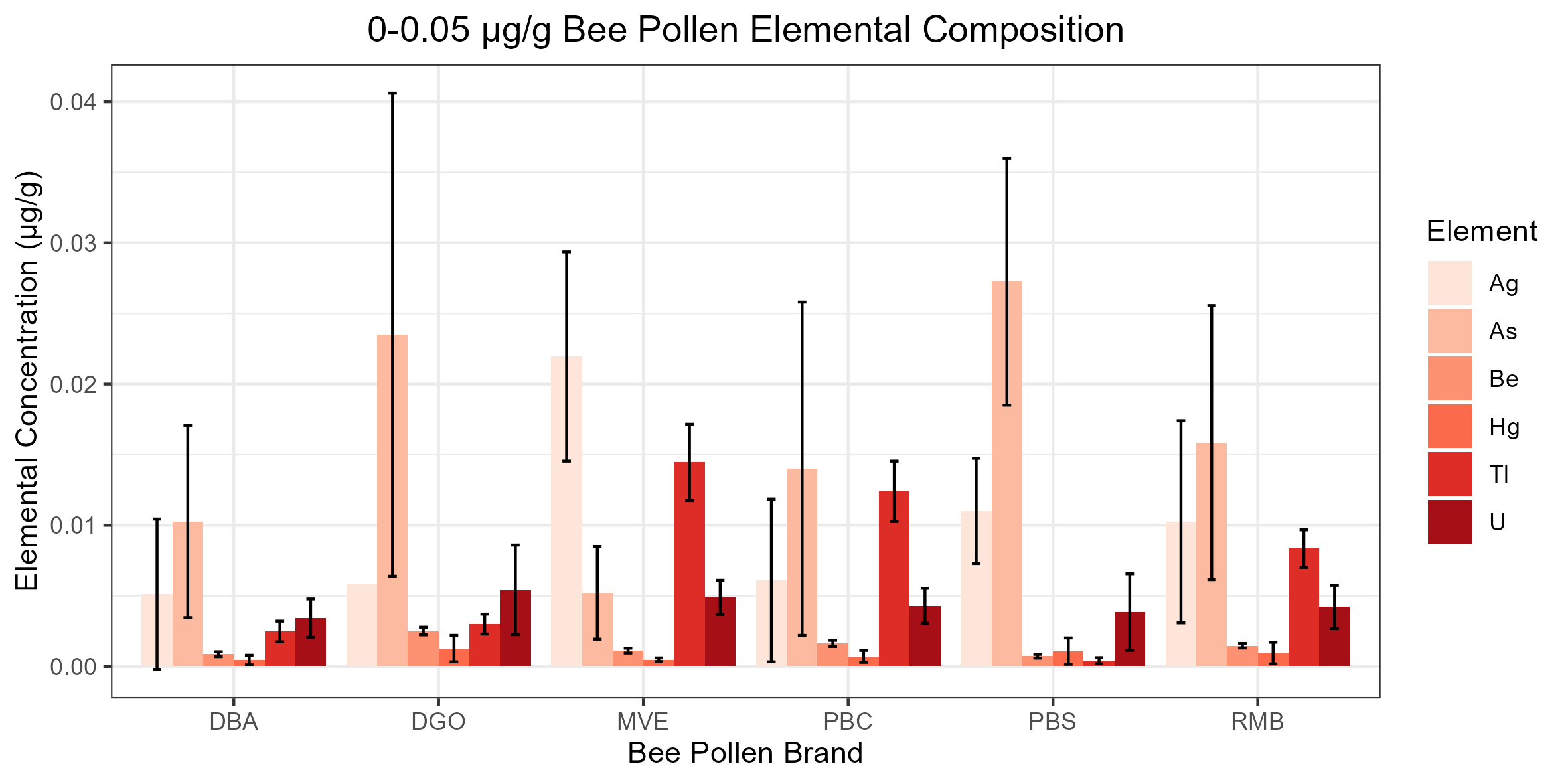
Throughout my directed studies, analyzing trace metals and B pollen is probably the best example of analyzing results and converting them into an understandable manner. As an analytical chemist, this research project involved many replicate analyses to provide precision and confidence in my interpretation. With so many values received from the analysis and many elements investigated. I had 1500 values that had to be condensed into a meaningful conclusion. This really showed me the importance of interpreting results because even people who are experts in the field would have to go through a lot of data and then make calculations on their own to even start interpreting the results, so being able to show my results on a graph and then discuss them in a much shorter manner was very important for this analysis process. Here is an image of my raw data from the experiment and how I interpreted the results and presented them in a graph, which was much easier to understand.

  • Organic Chemistry Laboratory

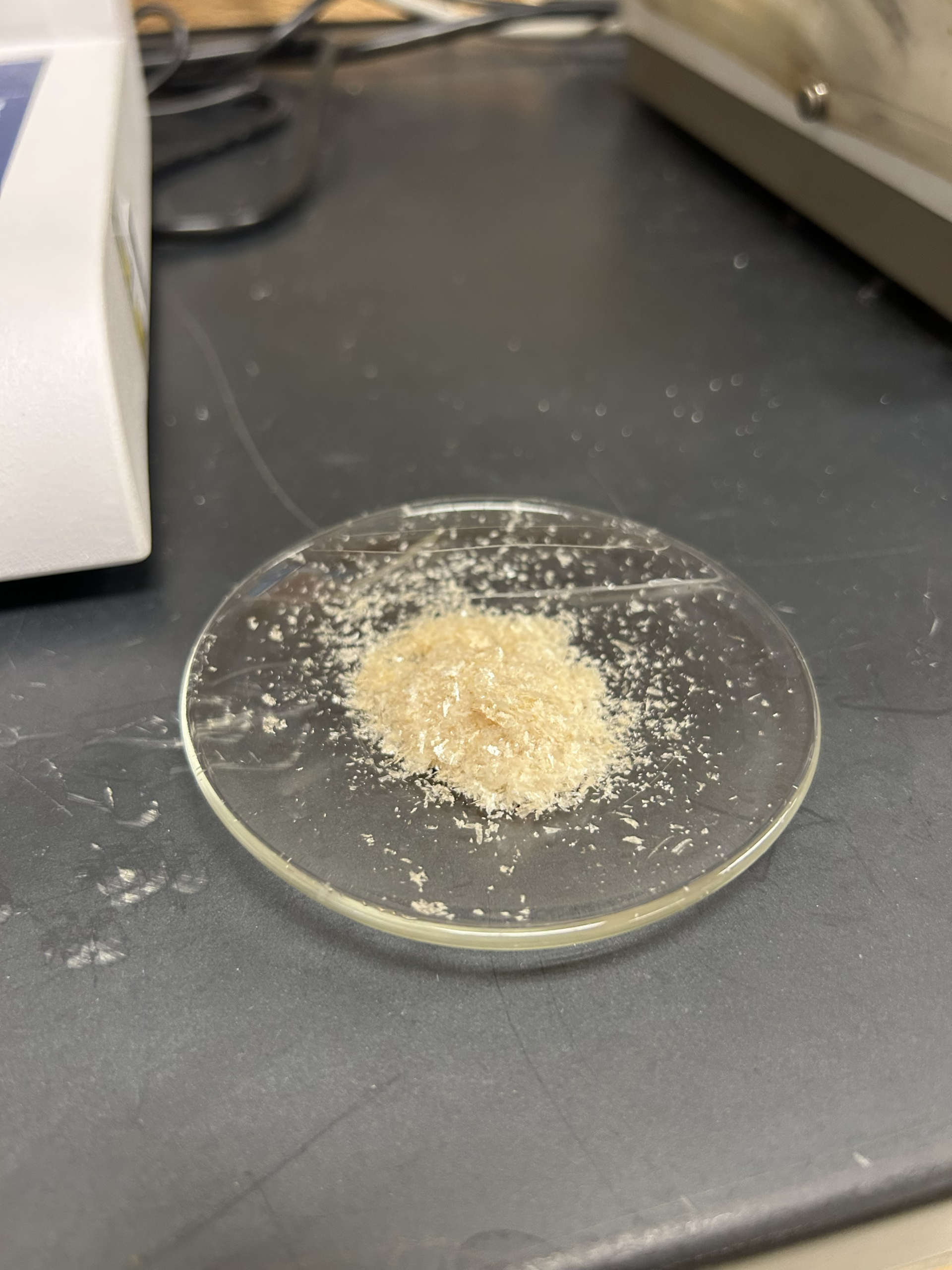
In my various organic chemistry laboratories, the results you get can be ambiguous and difficult to interpret. For example, saying that you synthesized and isolated a white solid with a massive .2 g does not mean very much; however, being able to understand the research process, what the chemical is and the purity of it, along with doing a literature review to determine if this chemical is actually what you intended to synthesize, is very important for the analysis process and converting your results into meaningful findings.

  • Research Conferences April–June 2026

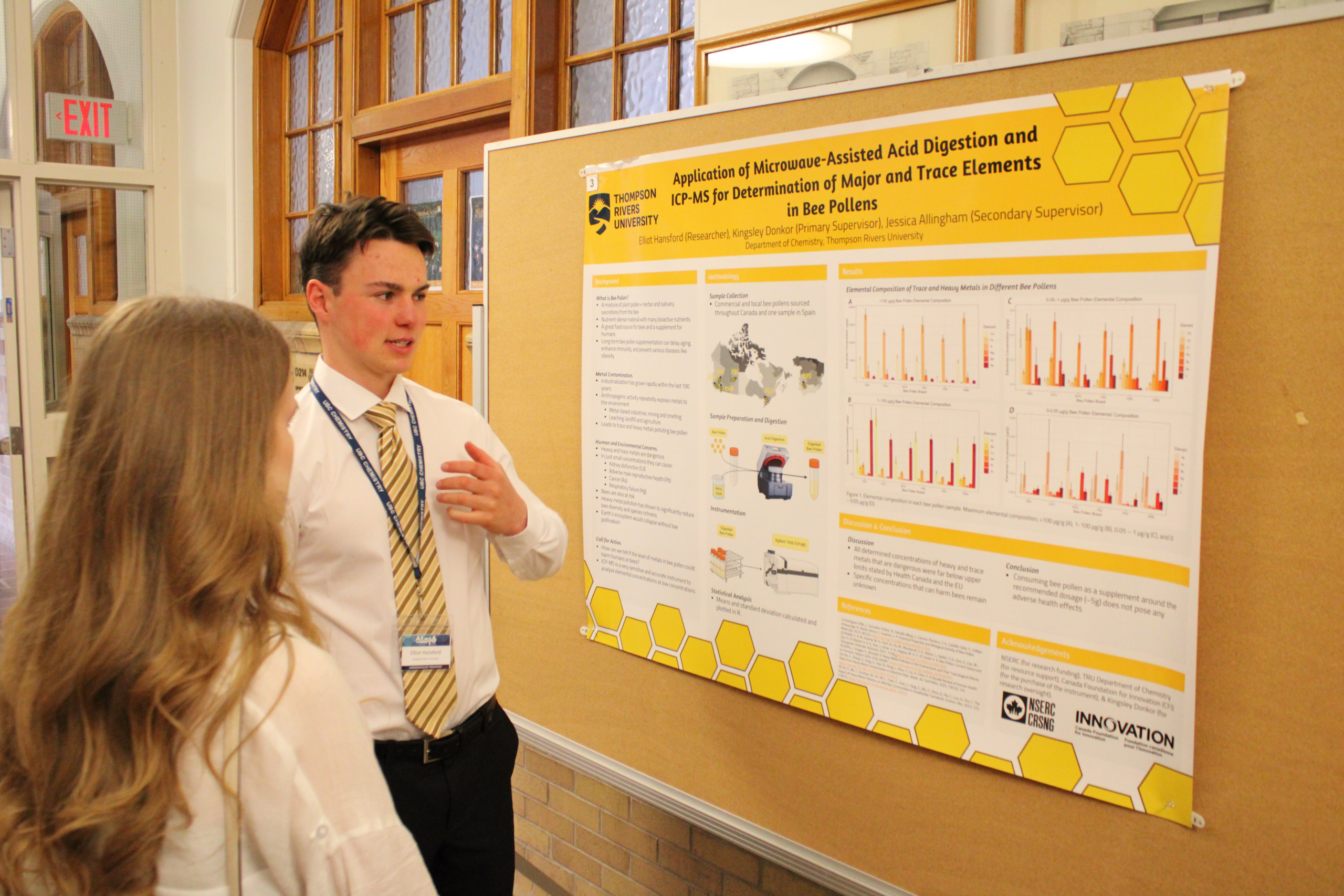
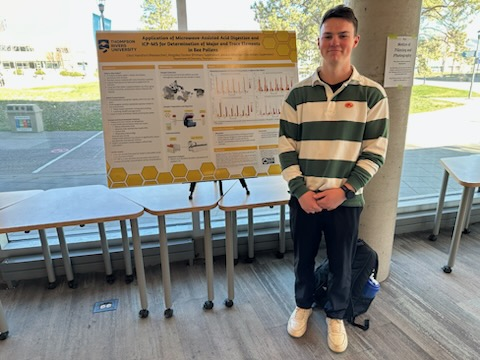
I presented at SUPER (TRU), CSC 2026 (Toronto), and WCUCC 2026 (Vancouver). Preparing forced me to understand the rationale behind every step of my methodology. Talking with graduate students and established researchers at CSC gave me a realistic picture of a research career. Attending other talks also sharpened my ability to interpret unfamiliar research.

I attended SUPER (TRU), CSC 2026 (Toronto), and WCUCC 2026 (Vancouver) last year. Having to prepare to present my research at such conferences, where I wanted to do well, helped me gain a deeper understanding of my results because I had to completely understand the methodology and purpose of doing each part and how each chemical interacted with each other during the entire process. Sharing my findings was very rewarding, as many people were interested in my work, and it was joyful to share it with them. Additionally, at these conferences, I got to hear other people’s findings on the research projects, which was also very insightful. Going to CSC in Toronto, where there were many graduate students and even more established researchers give me great insight into what being a professional researcher is like.

  • Course Presentations

Along with these research conferences, I very regularly have to come up with a presentation for various courses in my degree and treat them in a similar way to ensure that I have a full understanding of my methods and results and am able to present them in a timely manner.

  • Talking with fellow researchers

Being friends with other analytical chemists that do research at TRU has been very insightful for me. Having the opportunity to discuss difficulties I’m going through in my research and how they may have gone through similar difficulties or have a different way of looking at the situation that helps resolve it has been very useful. Likewise, I’m able to provide my insight to other people who research where I might have more experience and help them do something.

REFLECTIVE ESSAY.

Instructions:

Write a 1000-word limit reflection on the knowledge, skills and/or attributes you have gained as a result of your research activities.

What you need to cover:

  • Describe your mindset and attitudes prior to your research involvement
  • How did participating in these research activities change or shift your way of thinking, behaving, or communicating?
  • Why are your research activities important?
  • How will your research experiences impact you in the future?

Formatting for the essay:

  • 12-point font, double-spaced, no more than 1000 words

What we DO want in the essay:

  • Use the knowledge, skills, attitudes and awareness section for reflection
  • Clearly communicate your learning or shift to us (the committee) by using explicit examples
  • Proofread essay
  • Follow the formatting guidelines stated above

What we DON’T want in the essay:

  • We do not want a list of accomplishments
  • We do not want anything exceeding 1000 words
  • Please do not simply repeat events that are evident in the portfolio

Note: All of the instructions listed above should be replaced with your personal writing or deleted prior to submitting